Gluten Free Cornbread Muffins

Tags

, ,

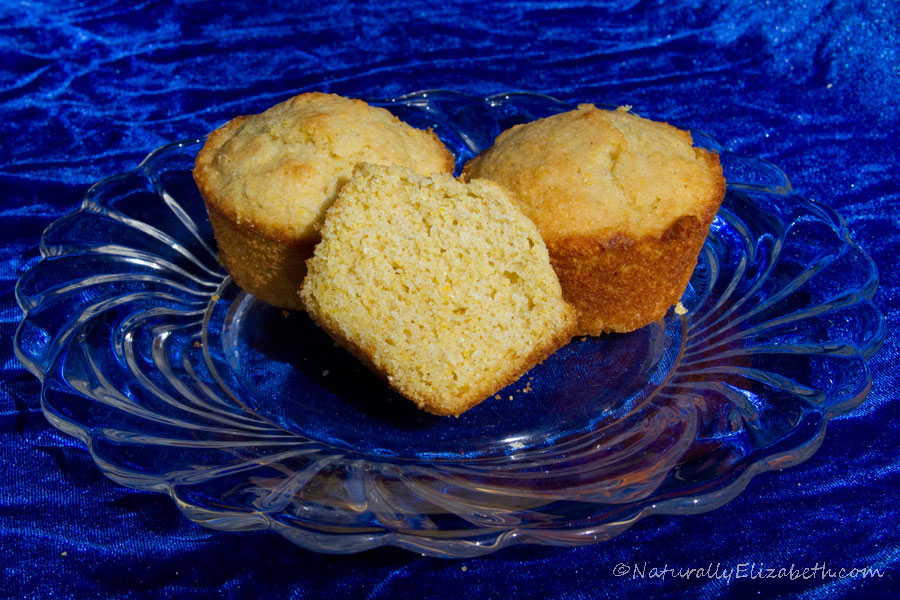
I gave up trying to get a picture without crumbs around the muffins. They dropped crumbs on the plate every time I made adjustments. This is just the way it is.

I am pretty fussy about my cornbread.  I don’t like it to be overly sweet which I feel like most recipes are.  Hence, has taken me quite a while to get a recipe that works well for me.  The rest of my family will happily eat these, too, even if they are gluten free.  They taste better made with butter (doesn’t everything?), but if you are dairy free, substitute shortening, canola oil or coconut oil and they will come out fine.

The original recipe calls for using paper muffin cup liners.  I hate them.  I feel like they are an environmental waste and that oiling a pan is just as good in most recipes.  I have only one recipe (nectarine cupcakes—they’ll show up on the blog next summer when stone fruits are in season) where I have to use them because the cupcakes fall apart too much if I don’t.  I also react to the cupcake liners when they are in the oven.  They give off something toxic when heated.  I don’t really want to add toxins to my food when I’m going out of my way to make sure it’s organic!

GF Cornbread Muffins

Adapted from The Food Network 

1 cup organic yellow corn meal
¼ cup organic millet flour
¼ cup organic brown rice flour
¼ cup organic tapioca starch
¼ cup sorghum flour
½ teaspoon xanthan gum
1.5 Tablespoons baking powder
¼ c organic granulated sugar
1 teaspoon sea salt
1 cup organic coconut milk (full fat)
2 large organic eggs
¼ cup organic butter, melted*
¼ cup local honey

Preheat oven to 400F.  Oil 12 muffin cups with canola oil or the oil of your choice.  Set aside.

In a small bowl, mix together the coconut milk, eggs, butter, and honey.  In a large bowl, mix together corn meal, millet flour, brown rice flour, tapioca starch, sorghum flour, xanthan gum, baking powder, sugar, and salt.  Pour the liquid mixture into the dry mixture and stir well.  Divide the batter evenly between the 12 muffin cups.  Bake for 15 minutes at 400F.

*If making this dairy free, substitute coconut oil, canola oil, or palm shortening.

©NaturallyElizabeth.com
About Flours and Sugars

Tags

, , , , ,

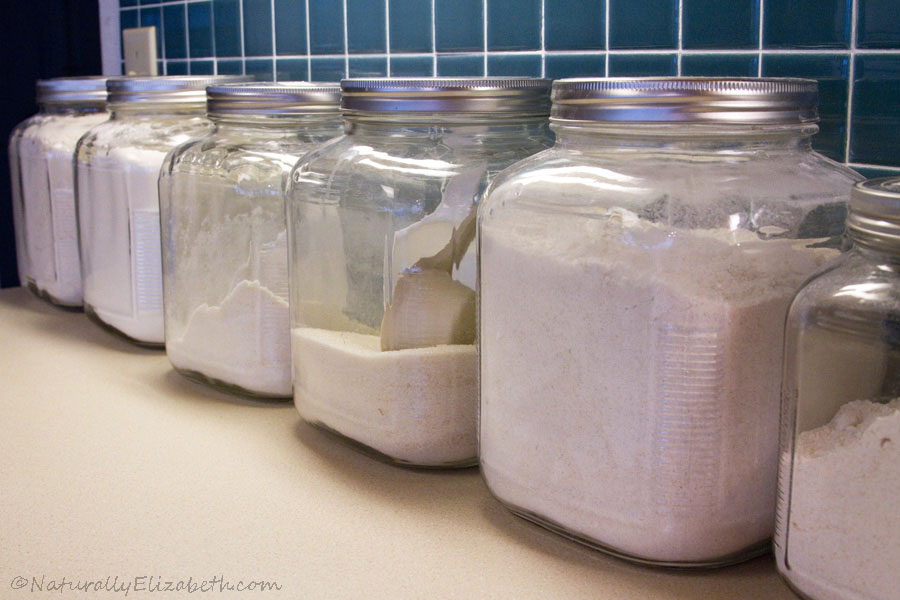
From left to right, the canisters contain whole spelt flour, all purpose flour, my gluten free millet flour blend, evaporated cane juice, my gluten free almond meal blend, and whole wheat pastry flour. The one with Sucanat is to the right out of the photo.

When I first tried to bake gluten free over a decade ago, it was a dismal failure.  I was using a cookbook that only called for brown rice flour with the occasional potato starch added in.  The recipes were terrible.  So I gave up.

Ten years later and with a far more developed internet, gluten free recipes abound.  I started trying other people’s recipes, and I was rapidly able to figure out what worked and what didn’t.  I tend to go for the “simpler is better” approach to life, but when it comes to flours and gluten free baking, more is better.  The texture and taste of gluten free baked goods are greatly improved by having a mixture of different flours.

I have two basic flour blends that I use a lot.  The first blend is almond meal, sorghum flour, organic brown rice flour, and organic tapioca starch, all in equal proportions to each other.  The second is sorghum flour, organic millet flour, organic brown rice flour, and organic tapioca starch, again in equal proportions.  I add ½ teaspoon of xanthan gum to each cup of gluten free flour that I use.  Because I bake so often and in such quantities, I have canisters with these flour mixtures on my counter so that all I have to do is scoop out as much as I need. It saves time for me.  When you read a recipe that calls for ¾ cup of four different flours, I’m actually just scooping three cups out of my canister.

In my pantry at this time, these are the gluten free flours and other mainstays that I use:

  • By Bob’s Red Mill:  Almond meal, organic coconut flour, sorghum flour, gluten free rolled oats, xanthan gum (all purchased at Whole Foods)
  • By Arrowhead Mills:  Organic yellow corn meal, organic brown rice flour, organic white rice flour, gluten free steel cut oats (all purchased at Whole Foods) and organic millet flour (purchased from Amazon)
  • By Let’s Do Organic:  Organic tapioca starch and organic cornstarch (both purchased from Amazon)

I grind my own flax meal using a coffee bean grinder (never used on coffee) and organic flax seeds.  I started doing this an eternity ago and just haven’t stopped.  I was also grinding my own organic millet flour until I found it at Amazon.  I eventually want to be able to grind all my own flours, but I’m not there yet.  It consumes time and energy that I just don’t have right now.

When I am baking with gluten, I often use organic whole spelt flour.  I preferred the taste of it to whole wheat when I was still eating gluten and found it often baked better.  At other times, I will use organic whole wheat pastry flour or organic all purpose wheat flour.  All of these come from the bulk bins at Whole Foods.

As far as sweeteners go, I will often use organic Sucanat (purchased at Whole Foods in bulk or in packages) which adds a rich flavor that helps compensate for the blander taste of gluten free flours when compared to wheat or spelt.  I also use Wholesome Sweeteners organic evaporated cane juice (aka sugar) which we buy in a huge size bag from Costco (as if Costco would sell anything besides huge size).  I use the Wholesome Sweeteners brand of organic powdered sugar because the 365 brand clumps too badly, and I’ve had to resort to running it through the Cuisinart which is effort I’d rather not expend.  For brown sugar, I use the 365 brand organic light brown sugar.

The canisters pictured above are on my kitchen counter.  The are available at The Container Store.  They are only aluminum and glass so that I didn’t have to worry about outgassing vinyl or rubber, plus I liked how snugly they line up on the kitchen counter.  However, the lids can be a real pain to get threaded correctly at times.  My kitchen counter doesn’t normally look that great:  There’s usually a stack of recipes, a bunch of supplements, bulk items that haven’t been transferred into storage containers, and my purse all piled in front of the canisters.  However, I like how much nicer it looks when I clean it up for photos!

©NaturallyElizabeth.com

GFDF Chicken Vegetable Soup

Tags

, , , , , , ,

(While it’s a gorgeous 82F outside as I post this, winter will be back to Central Texas tonight with a colder and windy day forecast for tomorrow.  Soup season isn’t totally done around here!)

Like many parents, I struggle to get vegetables in my family.  I may serve the vegetables, but they don’t usually like them.  This is one of the exceptions to the rule.  My boys willingly eat vegetables in the form of soup.

This is a recipe I have been making forever and came up with through trial and error.  It comes out slightly differently each time I make it because I throw in whatever I have around.  I often put in zucchini or yellow squash.  This could easily be cut in half if you aren’t cooking for an army.

Chicken Vegetable Soup

organic canola oil
2 organic peppers, diced  (green, red, yellow orange– whatever is available) (about 2.5 cups)
6-8 stalks organic celery, thinly sliced (about 2 cups)
1 large organic white onion, diced (about 2 cups)
8 medium organic carrots, peeled, sliced and diced (about 3 cups)
1 organic jalapeno with seeds, minced (optional but recommended for cleaning out the sinuses!)
5 medium organic potatoes, peeled and diced (about 4 cups)
1 large organic sweet potato, peeled and diced (about 2 cups)
2 lbs organic boneless skinless chicken breasts, trimmed of fat but still whole
9 cups Mountain Valley spring water
1T organic garlic powder (or 6-8 cloves of garlic added with the onions)
2T sea salt
½ t organic black pepper
1 t organic dried rosemary
1 t organic dried thyme
1 t organic dried marjoram
2 packed cups of chopped fresh organic spinach

Coat  the bottom of an extra large pot with canola oil—I use a 7 quart Dutch oven.  Lightly sauté the peppers, celery, onion, carrots, and jalapeno over medium heat for a few minutes until the onions are beginning to become translucent.  Add the chicken, potatoes, sweet potato, water, garlic powder, sea salt, black pepper, rosemary, thyme, and marjoram.  Raise the temperature to high and bring to a boil.  Reduce to medium.  Continue cooking until the chicken breasts are done and the potatoes are starting to fall apart.  (I cook on an electric cooktop that takes longer than other stoves, so it is about 45-60 minutes on mine depending on the day and how frozen the chicken still is when I put it in the pot, but that’s just a guesstimate).  Remove the chicken breasts from the soup, allow to cool for a few minutes, and dice.*  Return the chicken to the pot along with the spinach.  Allow to cook for a few more minutes to allow the spinach to soften.

This soup will freeze but because of the potatoes in it, it doesn’t freeze well.

A half-batch version of this recipe also works well in the crockpot.  I lightly sauté the onions and then add all the ingredients except the spinach to the crockpot.  I cook on low for 8-10 hours in my 17 year old crockpot that cooks slower than new ones.  I throw in the spinach about an hour before serving.

*I abhor dealing with raw meat, so I choose to dice the chicken after it’s cooked.  You could also dice it raw and then not have to do this step.

©NaturallyElizabeth.com

GFDF Split Pea Soup

Tags

, , , , , , , ,

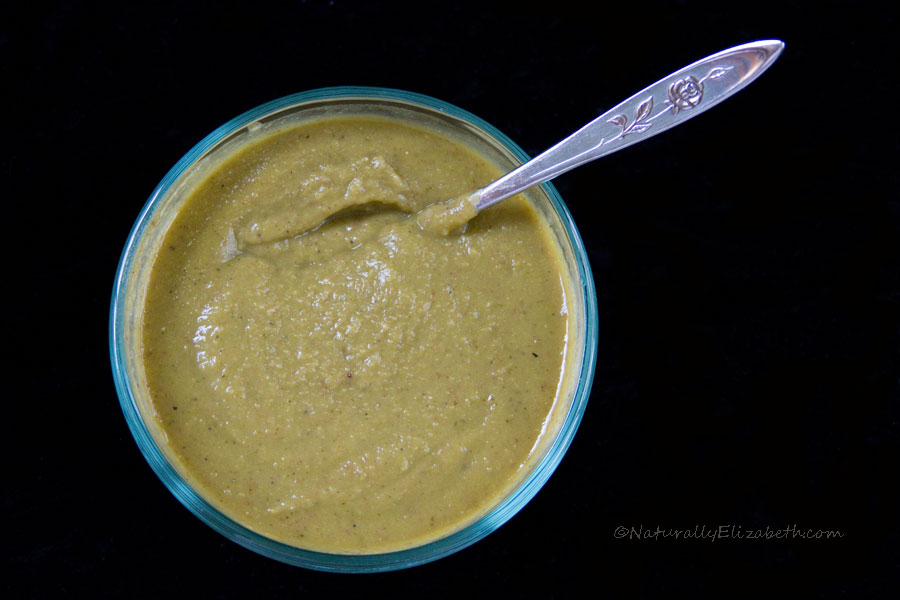
My kids will not eat this soup.  They refer to it as “green concrete” because of the way it congeals in the fridge.  I, on the other hand, love it.  It freezes well, so I will make a huge pot and defrost a jar of it on occasion when I want easy lunches for me.  It is not the most attractive looking soup, but it really does taste great.

This recipe is designed to feed a small army but can easily be cut in half.

Split Pea Soup

organic canola oil
1 small organic onion, finely diced
4 organic carrots, thinly sliced
2 stalks of organic celery, thinly sliced
3 cloves of organic garlic, minced
about 1 c organic diced peppers (in this green)
about 1 c organic cauliflower stalks (or whatever other veggies need using up)
about 3 c organic dried split peas
about 10 c of Mountain Valley water
2T dried organic tarragon
about 2T sea salt
about 2t organic black pepper
about 1 t organic garlic powder
1 bunch of organic greens or kale, torn in small pieces
2 -15 oz cans organic red beans (or white would work well, too)

In a large soup pot, sauté the onion, carrot, celery, garlic, peppers and cauliflower in a few tablespoons of canola oil for a few minutes.  Add the water, split peas, tarragon, garlic powder, salt and black pepper.  Cook over medium heat until the peas are mush and the veggies are soft.  Add the greens and cook for a few minutes until tender.  Remove from heat.  Stir the red beans in.  Puree with an immersion blender.  Freezes well.

©NaturallyElizabeth.com

About This Blog

Tags

, , , , , ,

I am one of those individuals in the world who is incredibly sensitive to the abundance of synthetic chemicals in our environment.  In order to maintain a modicum of health, I keep a green home and eat almost exclusively organically.  I cannot find organic gluten free oats, organic almond meal, or organic sorghum flour, so those are some of the most prominent exceptions.

With my health issues have come the challenge of food sensitivities.  I currently cannot eat gluten, most dairy, chocolate, red onions, watermelon, blackberries, raspberries, and green beans though I love all of them.  Many of those foods cause migraines for me; others cause my body not to function well in other ways.  Previously, I have had to avoid eggs, soy, and rice.  I have dealt with food sensitivities in my children that have included dairy, wheat, soy, corn, beef, fish, nuts, teff, sorghum, citrus, garlic, and more.  Fortunately, as they have gotten older, my kids have outgrown most of their food sensitivities.  At this time, one of my children is sensitive to some dairy and one of my children is sensitive to soy.

Our family eats an omnivorous diet, though I do make vegetarian and vegan items which I will tag as such.  Most of my posts will be gluten free recipes, though I do still cook with gluten for the rest of my family even though I can’t eat it.  I prefer to use local, seasonal produce bought at organic farm stands and the farmers’ markets in Austin, Texas.  I don’t like using store-bought mixes or prepackaged foods both because I react to so many things and because they take the challenge and art out of cooking for me.

I am starting this blog because friends keep encouraging me to do so.  A special shout out goes to Bless Her Heart for repeatedly pushing me in this direction.

I also have an outdoor photography business, so I will usually be illustrating this blog with photos taken using a Canon EOS 7D and a Canon 100 mm f/2.8 macro lens.  I occasionally use other lenses including a Canon 50 mm f/1.8, but my macro lens is my beloved favorite.

©NaturallyElizabeth.com